
How to Wash a Bed Bug Mattress Cover Without Ruining It
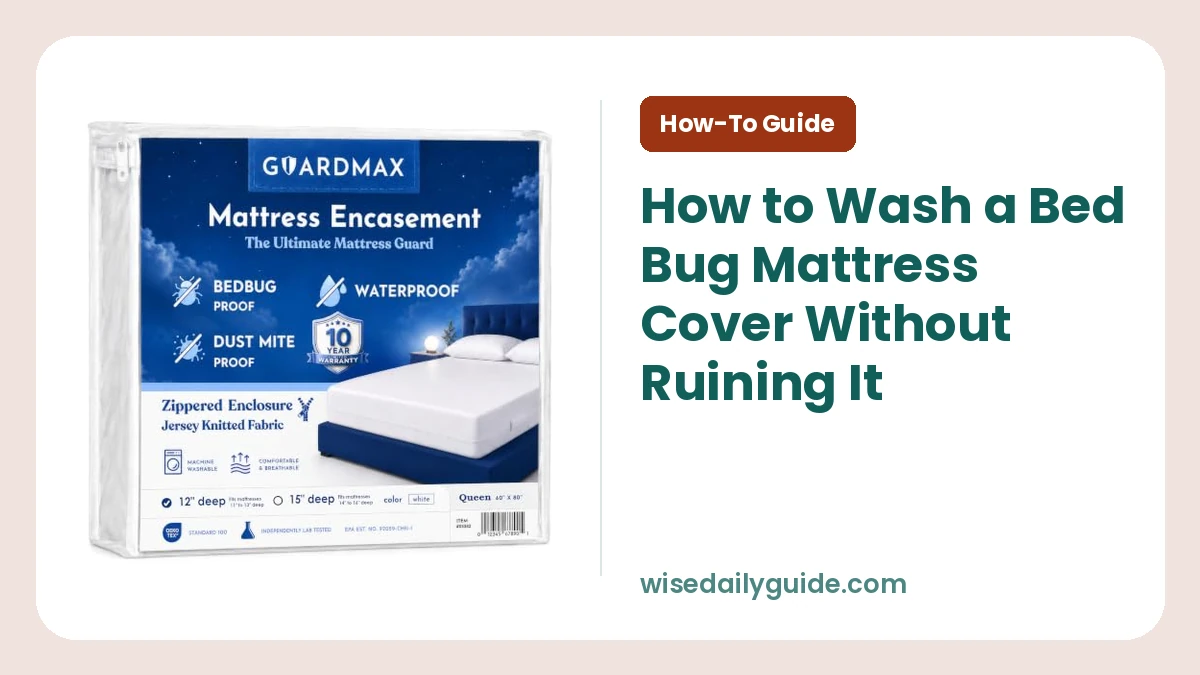
Knowing how to wash a bed bug mattress cover safely protects its zipper, seams, and barrier fabric. The job takes about 1 to 2 hours of active laundry time, plus drying time. First, check the sewn-in label. Then zip the encasement closed, wash it alone on a gentle cycle with cool or warm water and mild detergent, and dry it only at the temperature the label allows.
Heat that is too high can shrink fabric, damage a waterproof backing, or weaken zipper seams. The most important rule is simple: follow the manufacturer’s instructions when they differ from general laundry advice. Bed bug encasements use different fabrics, membranes, and zipper designs, so one cover’s safe setting can damage another.
What you need
Gather these supplies before removing the cover from the bed:
- Your bed bug mattress cover’s care label or product instructions
- Mild liquid laundry detergent
- A washing machine large enough for the cover to move freely
- A dryer, drying rack, or clothesline, based on the label
- A clean hamper, large bag, or clean sheet for carrying the cover
- A flashlight for checking the zipper, seams, and fabric afterward
Skip bleach, fabric softener, dryer sheets, and harsh stain removers unless the care label specifically permits them. These products can leave residue, weaken coated fabric, or affect the cover’s water-resistant layer.
How to Wash a Bed Bug Mattress Cover Step by Step
1. Read the care label before taking the cover off
The label gives the safest water temperature, wash cycle, and drying method for that specific encasement. Look for directions about machine washing, hand washing, tumble drying, ironing, bleach, and dry cleaning.
A bed bug mattress cover is usually a full encasement, not a simple fitted mattress pad. It has a zipper that seals all the way around the mattress, plus tightly woven fabric or a membrane designed to block bed bugs from passing through. That construction needs gentler care than ordinary sheets.
During an active bed bug issue, do not remove an encasement just to wash it unless your pest control plan says to do so. A correctly installed encasement is meant to remain sealed. Opening it can interfere with monitoring and treatment, especially when bugs are contained inside.
2. Inspect the cover while it is still on the mattress
Use a flashlight to check the zipper track, zipper stop, seams, and corners. Look for holes, split stitching, worn spots, or a zipper that does not close smoothly.
Take a photo of any damage before washing. Laundry will not repair a compromised cover, and a tear or broken zipper can reduce its ability to contain or block bed bugs.
3. Zip it fully closed before removal
Close the zipper completely and secure any zipper flap or end-stop feature. This keeps the cover from snagging on itself in the washer and reduces the chance of catching the zipper on other laundry.
Remove the encasement slowly. Avoid dragging it across the floor, especially in a room being treated for bed bugs. Fold it inward as you remove it, keeping the outer surface contained.
Place it directly into a clean bag or hamper. Carrying it loose through the home creates extra work and can spread dust, shed skin, or pests if an infestation is still present.
4. Wash the cover by itself on a gentle cycle
Put the cover in the washer without sheets, towels, jeans, or anything with zippers, hooks, or rough hardware. A crowded drum twists the encasement and puts stress on seams.
Use a gentle or delicate cycle with the water temperature shown on the label. Cool or warm water is common for fabric encasements, while hot water is only appropriate when the maker allows it.
Add a small amount of mild detergent. More detergent does not make the cover cleaner. It can leave soap behind, which makes breathable fabric feel stiff and may irritate sensitive skin.
For a large king-size cover, use a machine with enough space for the fabric to circulate. A tightly packed washer can pull at the zipper and leave detergent trapped in the folds. A laundromat machine with a larger drum can be a better choice for bulky encasements.
5. Run an extra rinse when residue is visible or likely
An extra rinse helps remove detergent from the inner folds and zipper area. It is especially helpful after using powdered detergent, washing in hard water, or cleaning a cover that had body oils or a stain.
Do not add fabric softener to the rinse. Softener can coat fibers and reduce the absorbency or breathability of some mattress cover materials.
6. Check the cover before drying
Take the encasement out of the washer carefully and support its weight with both hands. Do not yank it from one corner or lift it by the zipper.
Inspect the zipper and seams while the fabric is still damp. Make sure the zipper pull is attached, the teeth line up, and no seam has started to separate. Small problems are easier to spot before the cover dries and returns to the bed.
Treat stains only with a method approved on the label. Rubbing hard with a brush can thin the fabric, damage a polyurethane waterproof membrane, or roughen the tightly woven surface that forms part of the barrier.
Can You Machine Wash a Bed Bug Mattress Cover?
Many bed bug mattress covers are machine washable, but you should not assume every one is. The answer depends on its fabric, waterproof layer, zipper construction, and manufacturer’s bed bug mattress cover care instructions.
A washable encasement commonly uses polyester, cotton, or a cotton blend. Some also have a thin polyurethane layer that blocks fluids while allowing air to pass through. That layer can crack, peel, or separate from the fabric under excessive heat or harsh chemicals.
Use this quick guide only after checking the label:
| Cover feature | Safer laundry approach | What can cause damage |
|---|---|---|
| Woven fabric encasement | Gentle cycle and mild detergent | Overloading the washer or rough items |
| Waterproof or water-resistant layer | Cool or warm wash as directed | Bleach, high heat, and fabric softener |
| Fine-tooth zipper | Zip closed and wash alone | Snagging on sheets, towels, or other zippers |
| Thin allergen barrier fabric | Extra rinse and gentle handling | Abrasive brushes and strong stain products |
| Foam-backed or specialty cover | Follow the label closely | Assuming it handles standard laundry settings |
Never dry clean a cover unless its label explicitly allows dry cleaning. Solvents used in the process can harm coated materials or adhesives.
How to Dry a Bed Bug Mattress Cover Safely
The safest drying method is the one printed on the label. Many covers can go in a dryer on low heat, while others need to air dry. High dryer heat is the most common way to accidentally ruin an encasement.
When the label allows machine drying, select tumble dry low and remove the cover as soon as it is dry. Do not leave it in a hot dryer through several cycles. Extended heat can shrink the cover, making it difficult to reinstall over a deep mattress.
Air drying is slower but gentler. Lay the cover over a drying rack or hang it over several lines so its weight is supported. Keep it out of direct high heat from a radiator or heater. Avoid draping it over one narrow bar, which can stretch damp fabric and crease a waterproof layer.
Make sure the cover is fully dry before putting it back on the mattress. Moisture trapped inside a cover can create odor and encourage mildew. Feel the zipper tape, corner seams, and inner folds, because these areas stay damp longer than flat fabric.
Do not iron the cover unless the label says it is safe. An iron can melt or distort a waterproof backing in seconds.
How Often to Wash a Bed Bug Mattress Cover
Once you know how to wash a bed bug mattress cover correctly, avoid doing it more often than needed. For routine care, wash the outer surface as needed and wash the full encasement only when it is soiled, after a spill, or as directed by its care label. Unlike sheets, a mattress encasement does not need weekly washing.
Removing and reinstalling it too frequently puts avoidable strain on the zipper and seams. In a home without an active infestation, washing it every few months or during seasonal bedding changes is enough for many households, provided it stays clean and intact.
With an active or recent bed bug problem, follow the instructions from your pest management professional. The encasement may need to stay on continuously as part of the treatment plan. Do not wash it just because you see spotting or dust on the outside. Spot cleaning may be a safer option while the cover needs to remain sealed.
Wash sheets, blankets, and washable mattress pads on their own schedule. These items are easier to remove and are designed for more frequent laundry.
Common mistakes that ruin mattress encasements
A cover can look fine after laundry but still lose part of its protective function. Avoid these common mistakes:
- Using high heat by default: High heat can shrink the cover and damage waterproof film.
- Washing it with heavy linens: Towels and blankets create friction and pull on the zipper.
- Using bleach to “kill everything”: Bleach can weaken fibers and does not replace a complete bed bug treatment plan.
- Forcing a sticky zipper: Check for fabric caught in the teeth. Pulling harder can break the zipper.
- Putting it back on while damp: Moisture against a mattress can lead to odor or mildew.
- Ignoring a small hole: Bed bugs can fit through very small openings, so inspect damage closely.
- Using an encasement that no longer fits: A shrunken cover places stress on its seams and may not zip fully around the mattress.
What to do if the cover shrinks, tears, or will not zip
Do not force a shrunken cover over the mattress. Pulling hard can split the zipper seam or tear the fabric further. Let it cool fully after drying, then check whether it was removed from the dryer while still hot and bunched up. If it still does not fit, replacement is usually the safer option.
For a zipper that sticks, lay the cover flat and gently free any fabric caught in the teeth. Do not use oil, wax, or lubricant unless the manufacturer approves it. These substances can stain the mattress or attract dust.
A small tear needs attention before the cover goes back into service. Check the maker’s warranty or repair guidance. A patch may cover a cosmetic snag, but an encasement used for bed bug control needs an intact barrier and fully functioning zipper. Replace it when damage affects the seal, seam, or protective fabric.
Put the cover back on without stressing the seams
Make sure the mattress and cover are completely dry. Then place the cover over one mattress corner at a time rather than pulling it diagonally across the bed.
Ask another person to help with a queen, king, or heavy mattress. One person can lift the mattress edge while the other guides the encasement into place. This prevents excessive tugging at the corners.
Zip it closed slowly and inspect the entire zipper path. Close any zipper flap or secure end-stop piece. Finally, add a washable mattress pad and fitted sheet on top. Those outer layers handle everyday spills and reduce how often you need to remove the encasement.
Frequently Asked Questions
Can you wash a bed bug mattress cover with regular sheets?
No, wash it by itself whenever possible. Regular sheets can twist around the zipper, while towels and heavy items create more friction on the fabric. A separate gentle load gives the cover room to move and makes it easier to inspect for damage afterward.
Does washing a bed bug mattress cover kill bed bugs?
Washing alone is not a complete bed bug control method. Heat from an approved dryer setting can help with washable items, but the encasement’s main role is to create a sealed barrier around the mattress. Follow a complete treatment plan for an active infestation.
Can I use bleach on a bed bug mattress cover?
Do not use bleach unless the sewn-in label clearly permits it. Chlorine bleach can weaken fibers, fade fabric, and damage waterproof coatings. Use mild detergent first, then choose a manufacturer-approved stain treatment only when needed.
Why does my mattress cover feel stiff after washing?
Stiffness usually comes from detergent residue or drying heat that was too high. Run an extra rinse without detergent, then dry the cover according to its label. Do not use fabric softener, since it can coat the fibers and affect the cover’s performance.
Should I remove the encasement during bed bug treatment?
Usually, no. Bed bug encasements are designed to stay sealed on the mattress during treatment, but your pest management professional’s directions take priority. Removing one without a plan can disrupt monitoring or allow bugs that were contained to move elsewhere.
How do I know when a bed bug mattress cover needs replacement?
Replace it when the zipper will not close securely, seams separate, or holes appear in the fabric. Also replace a cover that has shrunk so much it strains around the mattress. An encasement works only when it fully surrounds the mattress without gaps.